
Shopify order-status guide

Order-status chatbots need more testing than product Q&A.

A bot can answer public product questions from store content. Where-is-my-order support needs verified customer data, live Shopify status, tracking limits, and a human fallback when the order story gets messy.

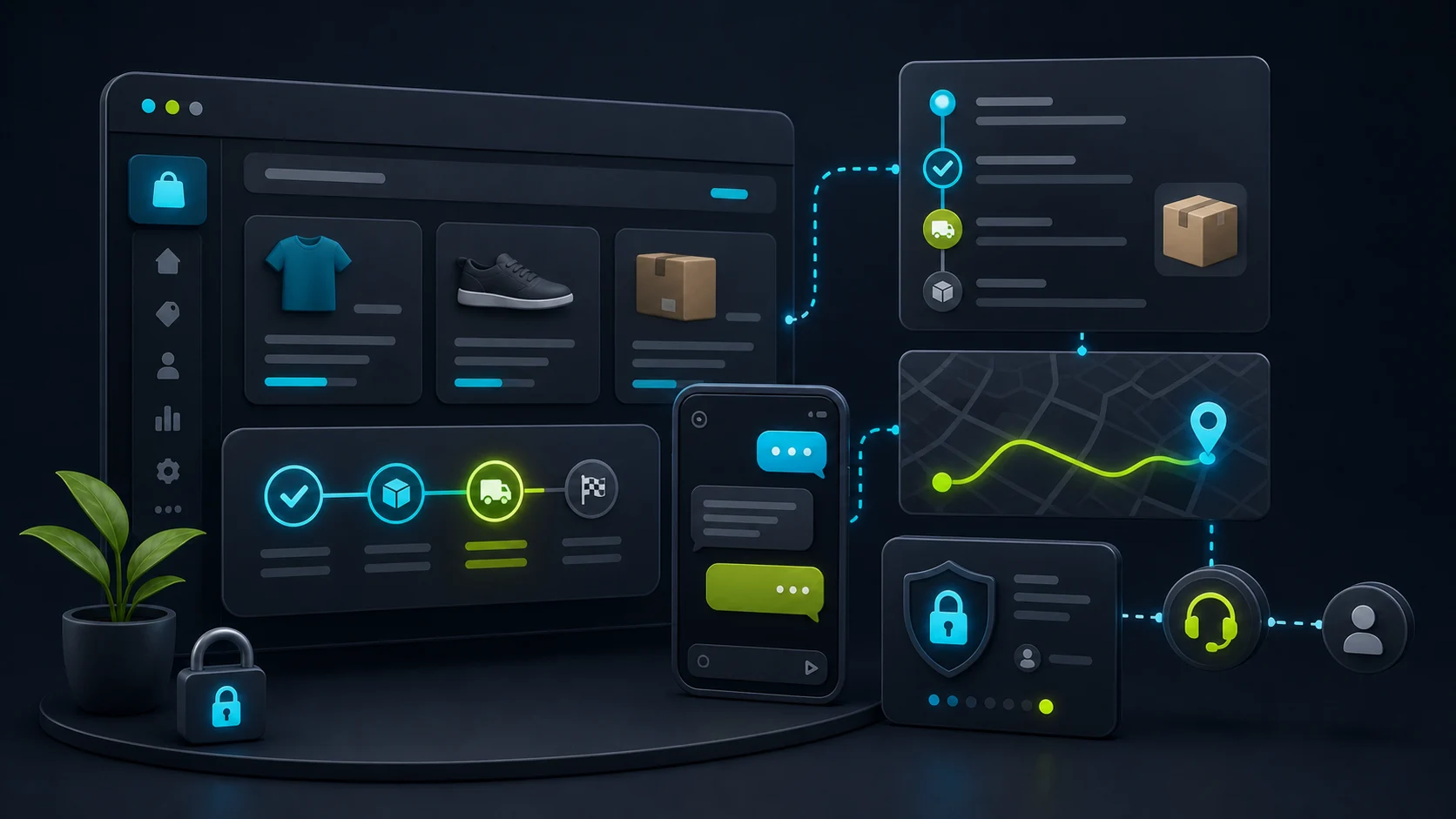
Editorial illustration of a Shopify order-status chatbot checking tracking data, customer verification, and support handoff.

Short answer

The three strongest documented candidates in this shortlist are Chatbase, ChatBot.com, and Tidio. Chatbase documents a broad Shopify Actions surface that includes Get Orders. ChatBot.com documents a dedicated Shopify order-status flow. Tidio documents a Shopify order-status Lyro action and Shopify-specific flow/action paths.

The buying trap is assuming the cheapest plan or the nicest product card is enough. For order status, check the verification method, what Shopify data is returned, how missing tracking is handled, and whether the conversation can hand off to support without asking the shopper to repeat everything.

Plan check

Price the support workflow, not just the signup plan.

Order-status automation can depend on actions, AI usage, support seats, and handoff workflow. These pricing snapshots use vendor pricing pages rechecked for this guide update.
Current as of 2 June 2026

Chatbase

Trainable website chatbot

Website chat Teams with help pages, files, Q&A, Notion, or support-ticket sources to manage.
Cheapest paid plan $32/mo annually Hobby plan

Includes: 500 message credits/mo, 1 AI agent, and 5 AI Actions/agent.

Typical price range
$0 to $400/mo annually; Enterprise is custom
What raises the bill
Message credits, AI agents, source limits, actions, seats, and add-ons

Check current price

ChatBot.com

AI support workspace

Website chat Teams comparing AI agent, live chat, shared inbox, ticketing, and workflows in one Text workspace.
Cheapest paid plan $19/user/mo Essential plan

Monthly: $25/user/mo

Includes: 1 AI agent, 10 AI resolutions/mo, and 10,000 API calls.

Typical price range
$19-$79/user/mo annually; Enterprise is custom
What raises the bill
Per-user pricing plus included AI agents, AI resolutions, API calls, and workflow allowances
Check current price

Tidio

Website chat and support

Live support Stores that need live chat, AI help, and human handoff in one workflow.
Cheapest paid plan $24.17/mo annually Starter plan

Includes: 100 billable conversations/mo; Lyro AI is separate, with the first 50 conversations lifetime free.

Typical price range
$24.17/mo Starter to $749/mo Plus; Premium is custom
What raises the bill
Billable conversations, Lyro AI conversations, Flows visitors reached, and seats
Check current price

Risk levels

Separate product answers from customer-specific order data.

The same store can safely automate product questions while still keeping order lookup, refunds, and account changes behind stricter checks.
01

Product Q&A

Lowest risk

The bot answers public product, shipping, returns, or FAQ questions from approved store content.
  • Product detail
  • Policy answers
  • Size guidance
  • Shipping FAQ
02

Order status

Customer-specific data

The bot needs a verified customer/order match and must reflect the status Shopify can actually provide.
  • Order ID
  • Email or postal code
  • Fulfillment status
  • Tracking link
03

Account changes

Human-review first

Anything that changes an order, address, refund, payment, or account detail needs stricter permissions and review.
  • Refunds
  • Address edits
  • Billing details
  • Delivery commitments

Workflow check

A safe order-status answer has four jobs.

The bot should verify the shopper, read Shopify data, explain only what the store knows, and escalate edge cases. If one of those steps is vague in the vendor docs, make it part of your live-store test.

Order-status path

From request to handoff

Use this as the buyer checklist before you offer customers instant order answers.
01 Verify

Confirm the customer and order

Look for email, order ID, postal code, phone, or authenticated-session requirements before trusting the result.

02 Read

Pull live Shopify data

The answer should come from Shopify order data or a connected action, not from a generic policy article.

03 Explain

Show the safest status

Good flows explain fulfillment, payment, tracking, or missing data without inventing delivery timelines.

04 Escalate

Hand off edge cases

Delayed, missing, disputed, refunded, or mismatched orders should route to support with enough context.

Shortlist

Which tool to inspect first

All three have official Shopify order-status documentation, but they fit different operating styles.

Broad action surface

Chatbase

Shopify Actions and AI agent

Start here if

Stores that want one AI agent with documented Shopify actions for products, orders, cart, profile, and billing-address workflows.

Before you choose

Get Orders requires authenticated customer context and cannot be proved from the dashboard Action Preview alone.
Check Chatbase ecommerce

Clearest order flow

ChatBot.com

Visual Shopify support flow

Start here if

Teams that prefer a configured flow where the bot collects Shopify order ID and postal code, then routes success or failure states explicitly.

Before you choose

You still need to build the status filters, failure path, tracking message, and handoff wording around your real Shopify statuses.
Check ChatBot.com

Support workspace

Tidio

Lyro action and support workspace

Start here if

Shopify stores that want order-status answers inside a broader live chat, Lyro AI, ticketing, and support-handoff workflow.

Before you choose

Verify your actual plan, Lyro usage model, Shopify connection, and whether you are using the Lyro Smart Action, flow node, or legacy action path.
Check Tidio pricing

Buyer checklist

Do not launch until these questions are answered.

Order-status claims are easy to oversell because the demo path usually shows the happy case. Test the awkward cases before sending real customers into the flow.

Launch check What to verify
Shopify connection Does the chatbot need a native Shopify integration, app embed, or API action before order data is available?
Customer verification Does it require email, order ID, postal code, phone, logged-in session, or another secure match?
Fulfillment status Can it show the actual fulfillment state returned by Shopify, including unshipped or partially fulfilled orders?
Payment status Does it distinguish paid, pending, refunded, or failed payment states without giving billing advice?
Tracking detail Can it show tracking URL, carrier, or latest shipping data only when Shopify or the carrier has it?
Guest orders What happens when a shopper is not logged in, used a different email, or mistypes the order number?
Missing or delayed orders Does the bot avoid inventing delivery dates and route the customer to a human path?
Support handoff Can the conversation pass order context to an agent, inbox, or ticket so the shopper does not restart?
Privacy boundary Can you limit what is shown in chat and avoid exposing sensitive account, billing, or customer data?

What the chatbot should not decide alone

Let the bot answer status, not commit to outcomes the store cannot control.

The first version should reduce repetitive order-status questions while protecting refunds, addresses, payments, and disputed cases.

Safe first pass

Collect verification details

Ask for the order ID plus the vendor-required email, postal code, phone, or authenticated-session match.

Return Shopify status

Show the order, fulfillment, payment, and tracking details that Shopify or the connected carrier has available.

Create handoff context

Pass the order number, verification state, latest status, and customer question to a human support path.

Human review

Refunds and disputes

Refund approvals, charge disputes, partial refunds, and fraud signals should stay outside the generic bot path.

Address or delivery changes

Changing shipping details or offering a new delivery date needs stricter checks than displaying current status.

Identity mismatch

If the email, order ID, phone, postal code, or login state does not match, route to support instead of exposing data.

Sources checked

Core vendor pages were rechecked on June 2, 2026. Some setup details can move behind vendor help-center access, so recheck vendor pages before relying on exact pricing, plan limits, Lyro action access, Chatbase AI Action limits, ChatBot.com AI-resolution limits, or Shopify workflow behavior.

FAQ

Shopify order-status: common questions.

Can a Shopify chatbot answer where-is-my-order questions?

Yes, but only when the bot is connected to Shopify order data and can verify the shopper. Treat order-status automation as a customer-specific workflow, not the same thing as public product Q&A.

Reviewed

Which reviewed Shopify chatbot has the clearest documented order-status flow?

ChatBot.com has the clearest documented visual flow for collecting order ID and postal code. Chatbase has the broadest documented Shopify action surface. Tidio has a documented Shopify order-status Lyro action and flow-node path.

Reviewed

What should stay with a human agent?

Refunds, disputed charges, address changes, delivery commitments, missing-package claims, fraud or identity mismatch, and account changes should be routed to a review path unless your store has tested a stricter automation workflow.

Reviewed

Decision recap

If this, then that.

  • Pick Chatbase — if one AI agent should handle products, orders, cart, and profile actions across the store.
  • Pick ChatBot.com — if a configured order-ID-plus-postal-code flow with clear success and failure branches is the priority.
  • Pick Tidio — if order-status answers should live inside a live chat, Lyro AI, and ticketing workspace.
  • Keep refunds, address edits, and disputes off the bot — until human-review wording, identity checks, and escalation context are tested.
  • Route to support — for guest orders, missing tracking, mismatched details, or delayed shipments.